Israel Education Through a Dual-Narrative Lens
For high school students and adults seeking a more thoughtful, values-driven way to understand and discuss Israel-Palestine.
Tovanot series- DC area
Join us for a special series for Community Leaders and Jewish Professionals
10:00 AM- 3:00 PM
Tuesdays- December 3, 9 & 16
Chevy Chase, MD
Space is limited.
Tovanot is coming to Boston
Join us for a special series for Community Leaders and Jewish Professionals
10:00 AM-5:00 PM
Sun, Oct 11 & Mon, Oct 12
Brookline, MA.
Space is limited.

Tovanot has officially arrived in Philadelphia and Chicago!
Following our facilitator trainings, we now have a dedicated team ready to bring Tovanot to communities in the Philadelphia and Chicago area
MoEd’s Tovanot program received the Silver Or Ami Award
MoEd’s Tovanot program received the Silver Or Ami Award from Women of Reform Judaism, recognizing its outstanding impact and innovative educational approach.
This national honor highlights Tovanot’s leadership in creating nuanced, values-driven Israel learning experiences.
Tovanot is an Israel education program for high school-age learners and above. It encourages values clarification, boosts knowledge and understanding, and builds empathy and confidence.
The literal translation of the word Tovanot is some combination of insight, understanding and takeaways, and that is how we imagine this program.
Why this? Why now?
‘Metaltel’ - something that throws you, shakes you, unsettles and destabilizes you. It is an apt description of the experience of engaging in the Israel conversation today, post-October 7, within and outside the North American Jewish community. So many people have had conversations they don’t necessarily feel equipped to handle or find themselves hesitant to engage, at a loss for words, or confused about what to believe. Others find themselves at painful odds with friends and family and feel forced to choose a side.
Tovanot came into existence against this backdrop. It responds to this moment and also addresses age-old gaps and ellipses in Israel education in the Jewish Community.
Tovanot utilizes a dual-narrative approach to help participants understand the historical and political environment in Israel and build empathy for Israelis and Palestinians. At its core, Tovanot rejects an either/or binary and refutes the claim that we’re engaged in a zero-sum game. Instead, Tovanot encourages a rigorous understanding of Israel and its significance to Jews and Israelis, alongside a concern for Palestinian lives and narratives. Program participants will gain the knowledge and tools to hold nuance and multiple narratives of Israeli Jews, Palestinian citizens of Israel, and Palestinians.
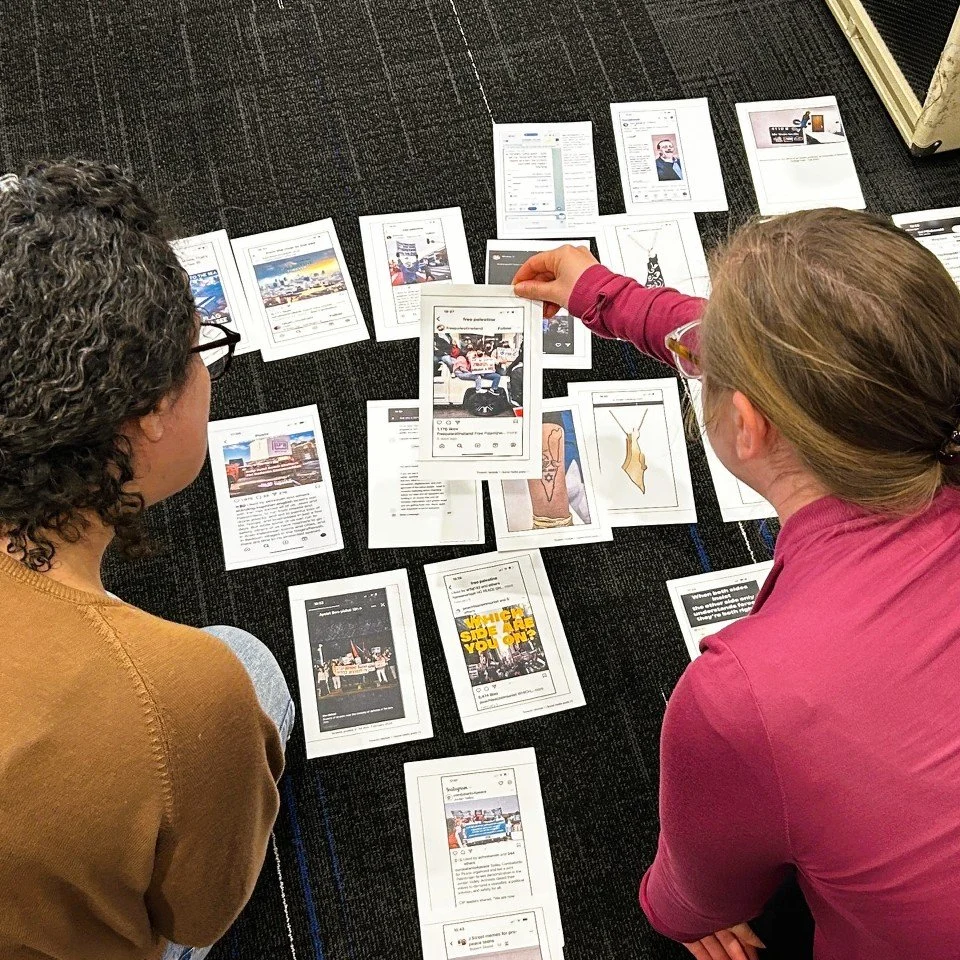
As participants gain awareness and knowledge of the different narratives surrounding historical events, they are encouraged to acknowledge and understand their discomfort and unease. They can align their positions with their values and embrace their concern for Israel and Israelis while also holding the humanity and rights of Palestinians. Having knowledge of and empathy for all sides of the conflict will help participants articulate their positions and build confidence in their ability to engage in the topic.
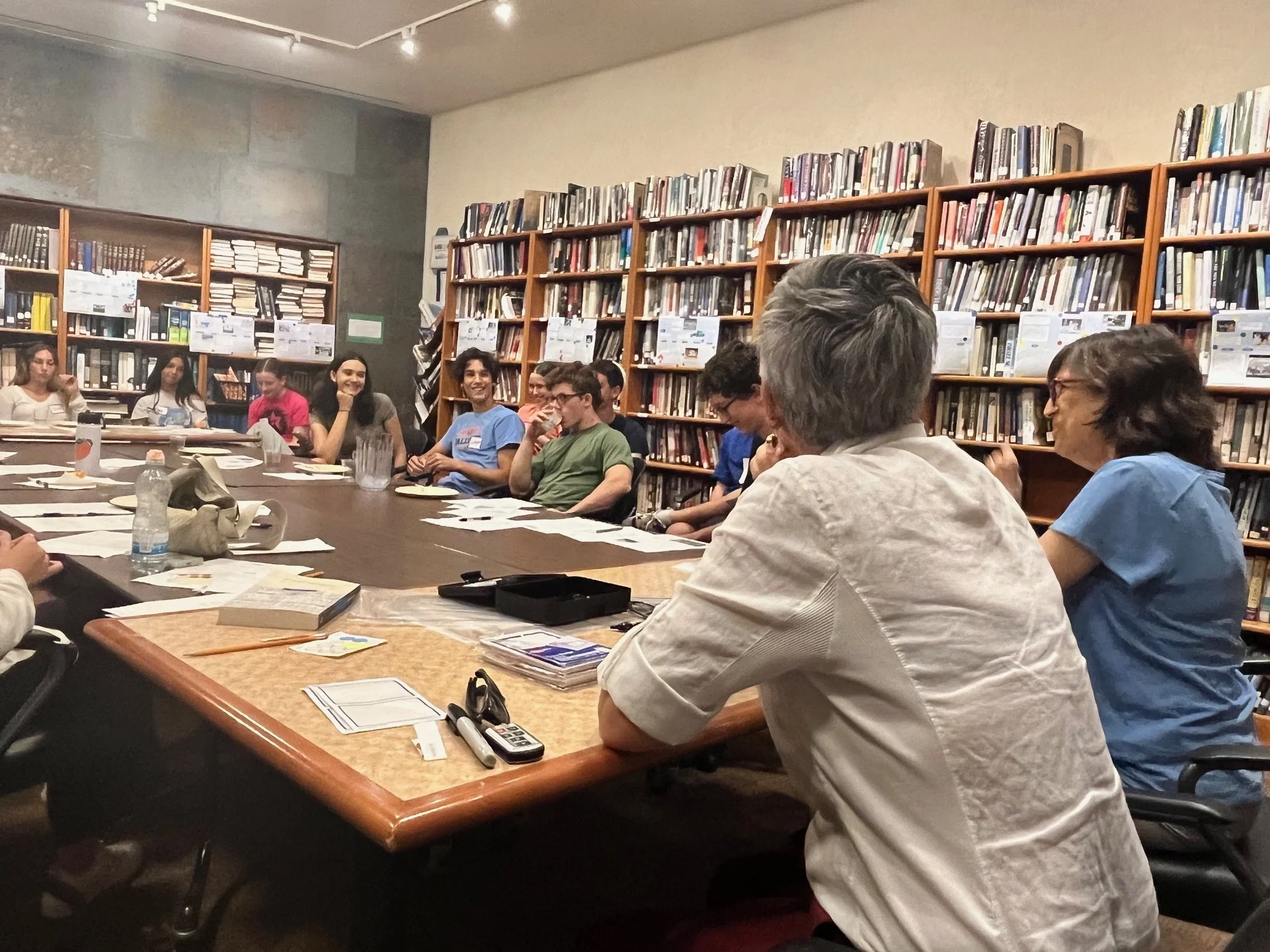
Participants will practice having courageous conversations and answering difficult questions.
They will use critical thinking and creative reasoning to articulate a vision that realizes the promise of a democratic homeland for the Jewish people, living in peace with itself and its neighbors, and guarantees the right of self-determination for Jews and Palestinians.
Tovanot Condensed: A 3-Hour Transformational Journey into the Israel-Palestine Conversation
This 3-hour immersive experience offers a compelling, top-line introduction to Tovanot, a groundbreaking dual-narrative program that reframes how we think, feel, and talk about Israel-Palestine.
This session is designed to reframe the conversation—to move beyond binaries and into a space of complexity, empathy, and deep personal reflection.
Participants will be introduced to the core principles and signature activities of the full 12-hour Tovanot program.
A nuanced understanding of both Jewish and Palestinian historical and contemporary claims to the land—and the profound commitment each people holds to their homeland.
The shared demographic and political reality: nearly equal numbers of Jews and Palestinians living between the river and the sea, with neither population disappearing.
MoEd’s Tovanot program received the Silver Or Ami Award from Women of Reform Judaism, recognizing its outstanding impact and innovative educational approach.
This national honor highlights Tovanot’s leadership in creating nuanced, values-driven Israel learning experiences

Whether you're stepping into this issue for the first time or looking to deepen your lens, Tovanot Condensed offers a bold, thought-provoking, and deeply human approach to one of the most charged conversations of our time.
Scope and Sequence
The program’s six modules include 12-14 hours of content, which can be delivered in a Shabbaton/retreat format or weekly classes. The modular program provides flexibility in execution and can be modified to fit different time frames.
-
Coming back to the Jewish Homeland after two thousand years- whose homeland is it anyway?
Learners will examine the Israeli and Palestinian declarations of Independence.
Learners will understand Jewish and Palestinian historical claims to the land.
Learners will experience a dual narrative approach to foundational historical moments, and understand its utility and impact
-
Which stories do we hear, and what is obscured? What does it look like to hear and see conflicting stories?
A story in maps – learners will take a deep dive into maps from historic Palestine, through the British mandate, the Armistice line/’67 borders, the Oslo accords, early aughts peace initiatives, land swap initiatives, and settlement watch maps. What are the stories these maps tell us?
Learners will use the maps to understand and assimilate facts on the ground and relevant geopolitical terms
Learners will ‘walk through’ and engage with a dual-narrative historical timeline from 1882 to the present.
-
What is the Israeli-Palestinian conflict, and why does it seem intractable? Why is the conversation so polarized? Is there another way to think about this?
Using the rubric of "lehiyot | am | chofshi | b'artseinu" learners will unpack the realpolitik and ideological hurdles to the aspiration of “being a free people in our land” expressed in Israel’s anthem and manifested in its Declaration of Independence.
Learners will understand the most commonly discussed solutions to the conflict proposed over the years and assess how they hold up under a dual-narrative lens.
-
What does pro-Israel mean if organizations with opposing positions in the American Jewish community all claim to be pro-Israel?
Participants will examine the different debates in the Jewish community around Israel.
Participants will unpack the idea of being ‘pro-Israel’ and ‘pro-Palestine’ and what it means on social media and to each participant individually.
Participants will explore ways to think differently and creatively through a dual-narrative lens.
-
Who are the Israelis and what do they care about?
Participants will distinguish between Israel as an idea and the quotidian lives of Israelis.
Participants will become familiar with the range of social issues Israelis face and will appreciate the Israeli parallels to the social challenges they care about in the US.
Participants will gain familiarity with shared Israeli-Palestinian civil society organizations that have ‘rejected the binary.’
-
Engaging in courageous and productive conversations and leading with empathy.
Participants will listen to stories that reflect different narratives of the conflict and will understand different truths.
Participants will understand and practice the principle of listening to understand rather than listening to respond.
Participants will learn practical skills for engaging with tough questions and carrying out courageous conversations.
Participants will develop and practice their Israel story
Tovanot Program Director

Ruti Kadish, PhD
Ruti was born in Israel, where she spent most of her childhood. After completing her military service, Ruti left Israel to study in the United States. She received a BA in Women’s Studies and a PhD in Near Eastern Studies from UC Berkeley. Before a postdoc in Israel Studies at the University of Maryland, College Park, Ruti was a Fellow at the Mandel School for Educational Leadership in Jerusalem, where she designed progressive Israel curricula for informal Jewish education. Through the early aughts, Ruti worked as a consultant in diversity education, primarily assisting primary schools in becoming more welcoming environments for all different kinds of families, including LGBT-headed families. For much of the past 15 years, Ruti has worked in the Jewish not-for-profit sector in education and resource development.
Bring Tovanot to Your Community
Testimonials
-
Sixth & I participant
As someone who was horrified at both the events of October 7 and the ensuing brutal war, I felt increasingly isolated in our current political environment. But Rejecting the Binary left me with a glimmer of hope for the future of Palestinians and Israelis alike. Ruti's reframing of things away from an 'us vs them' narrative really opened my eyes and gave me confidence that things really can get better. The dream of peace can be achieved as long as there are some of us who are willing to listen.
-
Sixth & I participant
This was a great class! I was worried it would be a downer or stressful given the underlying subject area but instead it was hopeful and even fun. I was really impressed by the way Ruti turned a class that could've been educational but despairing into something educational and enjoyable.
-
Max Grossman, academic, program advisor, and parent of teen
As an educator, I am pleased with the intellectual content and thoughtful approach of the Tovanot program. As a parent I’m happy to see my kid able to discuss challenging topics in a safe space where his love of Israel is embraced as part of the experience. I asked a high school student what was different about Tovanot, and he answered, 'She didn’t say that the Jews were victims; she said that the Palestinians are people.’ Participating in the Tovanot program also reminded me how important it is to get away from binary thinking and instead recognize the complexity of this shared history. The strength of Tovanot lies not just in presenting dual narratives but also in introducing us to events, ideas, and experiences that complicate the story of Israel, even for those of us who thought we knew it thoroughly. Struggling with these difficult realities has helped me to better understand my own love of Israel and my hopes for American-Jewish relationships with Israel in our shared future.
-
Erica Cohen, Director of Teen Education, Young Judaea
Ruti presented a Tovanot Israel program at the NJ iTeen Summit, an opportunity for teens to grapple with the nuances of Israel through a number of different discussions. The Tovanot program was engaging and impactful, as teens held the lens of their values over the political and historical landscape of Israel, while challenging them to question their pre-determined assumptions about themselves, each other and the content. The topics were resonant and the modalities were engaging, and the teens who participated in the Tovanot session expressed that they were left thinking about something in a new way. Additional Tovanot sessions are similarly impactful, consistent in their thoughtful and nuanced approach to Israel education, especially in today’s even more complex world.
-
Eli Kasargod-Staub, Washington DC
I speak from lived experience when I say that for decades the American Jewish community has educated its middle and high school students about the Israel/Palestine conflict in a way that drafted them into a unitary narrative about Israel's founding and history. The intentions behind this typical approach may vary, from fear that acknowledging complex and painful history would turn Jewish students away from ahavat Yisrael to overtly drafting students into "defend Israel" roles on college campuses. However, this approach often leaves students worse off -- either unable to internalize alternative or more complex views for fear of abandoning their community narrative, or rejecting the perspective of their community entirely once they learn about Palestinians' legitimate voices and perspectives. Against this backdrop, Ruti Kadish's Tovanot program is a breath of fresh air. Ms. Kadish trusts Jewish high school students to be able to handle the same nuances about Israel that they regularly navigate about American history, and from that vantage point, invites them to learn about and consider both Israeli and Palestinian narratives, separately and together. In this way, the Tovanot program successfully de-escalates the stakes for students learning about important and often painful history. It creates more space for students to actually access their own curiosity and willingness to engage. My family is so grateful that Ms. Kadish created the Tovanot program and would love to see it expand far and wide across our community.